
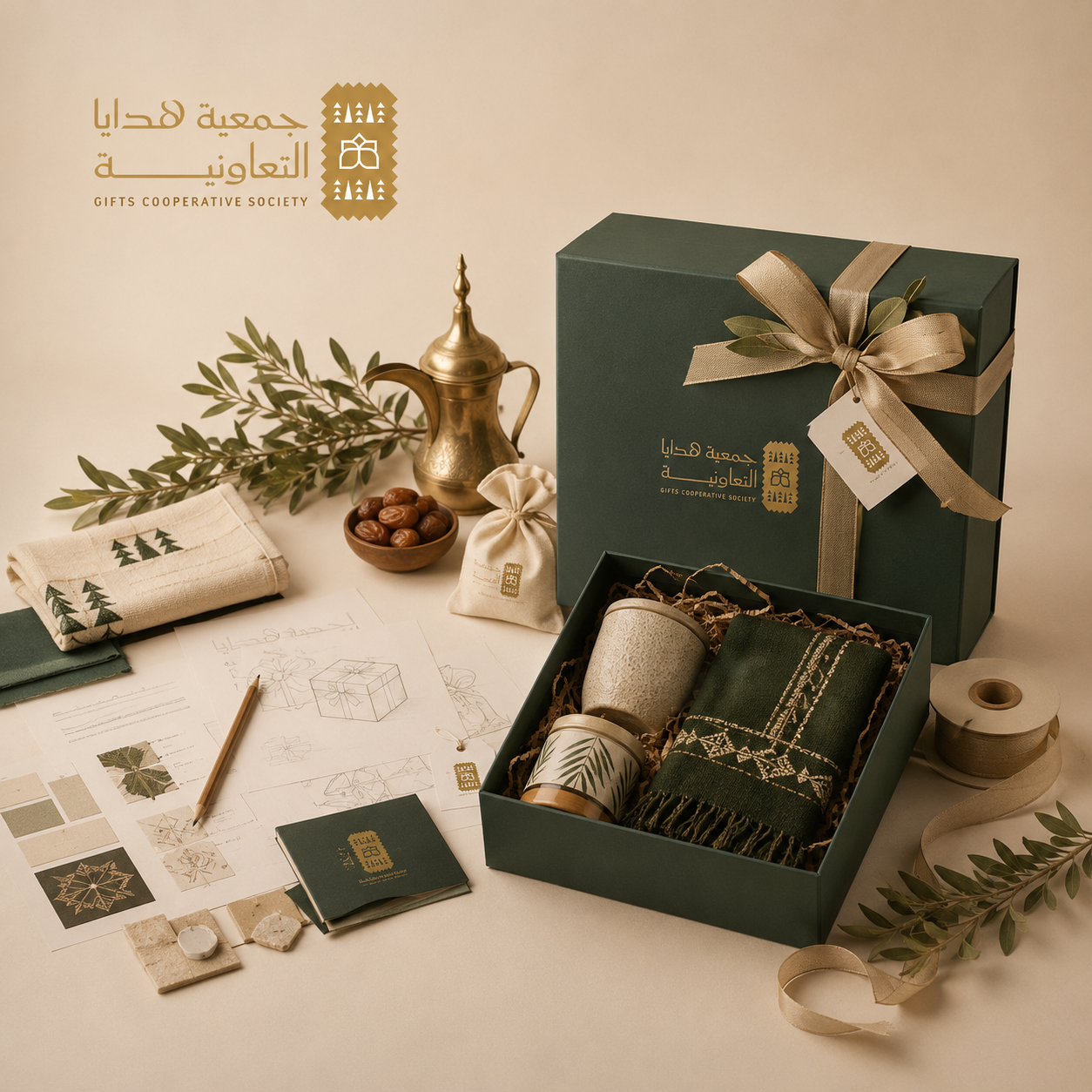
A successful gift depends on more than the item itself. The full experience begins before production and continues through concept development, material selection, quality control, packaging, and final presentation. Each stage influences how the recipient understands the gift and the organization behind it.
For institutional projects, structuring these stages early also helps reduce late changes, control the budget, and choose ideas that can actually be produced within the required quantity and timeline.
1. Understanding the Occasion and Recipient
The first step is to define the occasion, the presenting organization, the target audience, quantity, budget, and deadline. A VIP gift differs from an employee gift, and a protocol gift requires a different approach from a cultural event or internal celebration.
It is also useful to define the purpose of the gift: appreciation, welcoming a delegation, representing the organization, commemorating an occasion, or introducing a part of Saudi culture. The purpose directly affects the product, level of customization, and method of presentation.
If the event includes different audience levels, the project can be divided accordingly. See the main gift categories for organizations and occasions for a practical way to structure those levels.
2. Developing the Concept and Identity
Once the requirements are clear, the visual and narrative direction of the gift can be developed. This may begin with a story, a cultural reference, a material, a regional element, or a message connected to the occasion.
Brand identity does not need to appear as a logo on every product. It can be expressed through color, packaging, a card, engraving, or the way the elements are arranged. A clear concept is usually easier to execute consistently than a gift that tries to combine too many unrelated symbols and messages.
3. Selecting the Product and Materials
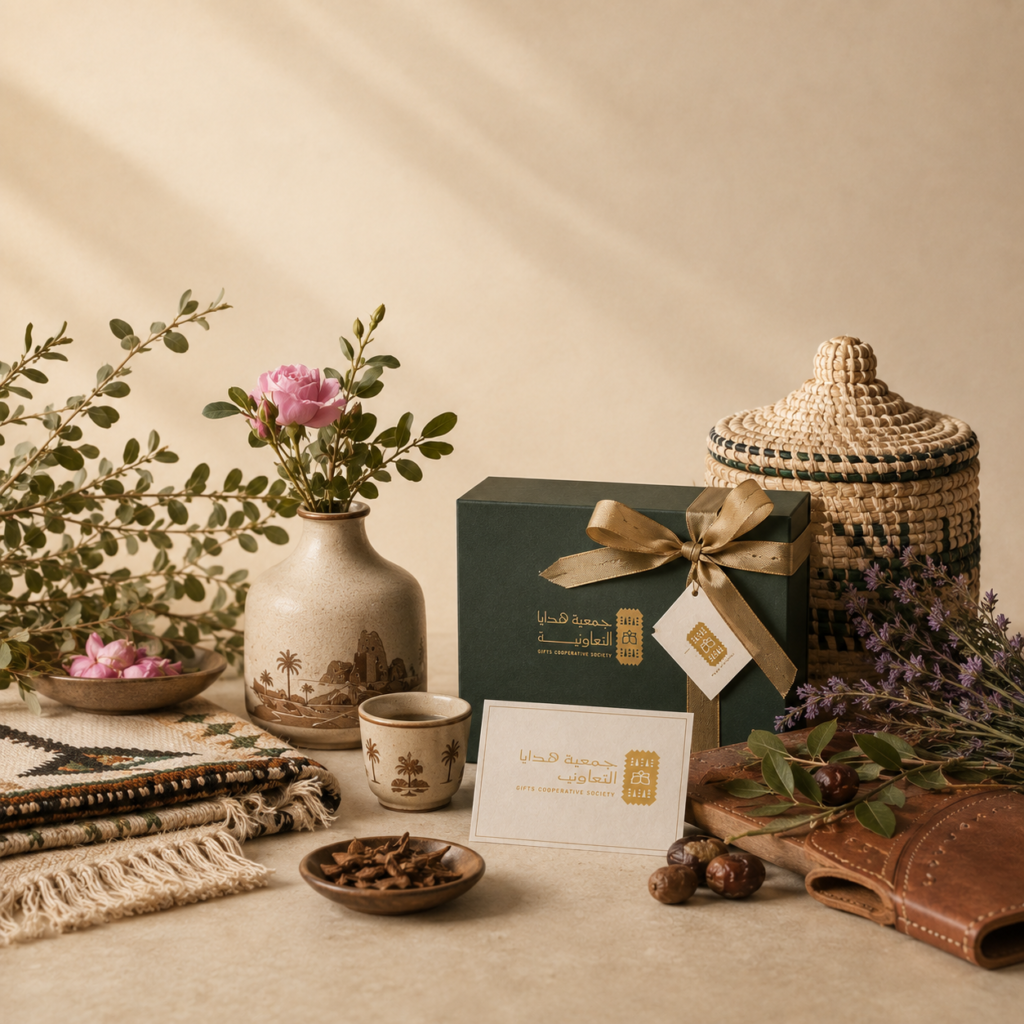
The product should be chosen according to intended use, perceived value, quantity, and the level of customization required. Materials may include wood, leather, Sadu weaving, palm weaving, pottery, fragrances, incense, dates, chocolate, or other locally inspired elements.
Availability and repeatability matter as much as appearance. A product suitable for ten pieces may not be practical for several hundred if dimensions, color, or finishing vary significantly between units.
When local materials or craft elements are involved, review Saudi materials and plants that can inspire gift design before finalizing the direction.
4. Production and Quality Control
The concept moves into execution through samples, prototypes, and approvals before full production begins. A physical sample can reveal details that may not be obvious in a digital design, including the real size of a logo, material texture, color accuracy, box closure, or product arrangement.
For larger quantities, quality control should be organized around clear checkpoints: the product itself, engraving or printing, internal packaging, cards and inserts, and final assembly before delivery.
This makes it easier to identify differences early and maintain a consistent result across the full order.
5. Packaging and Presentation
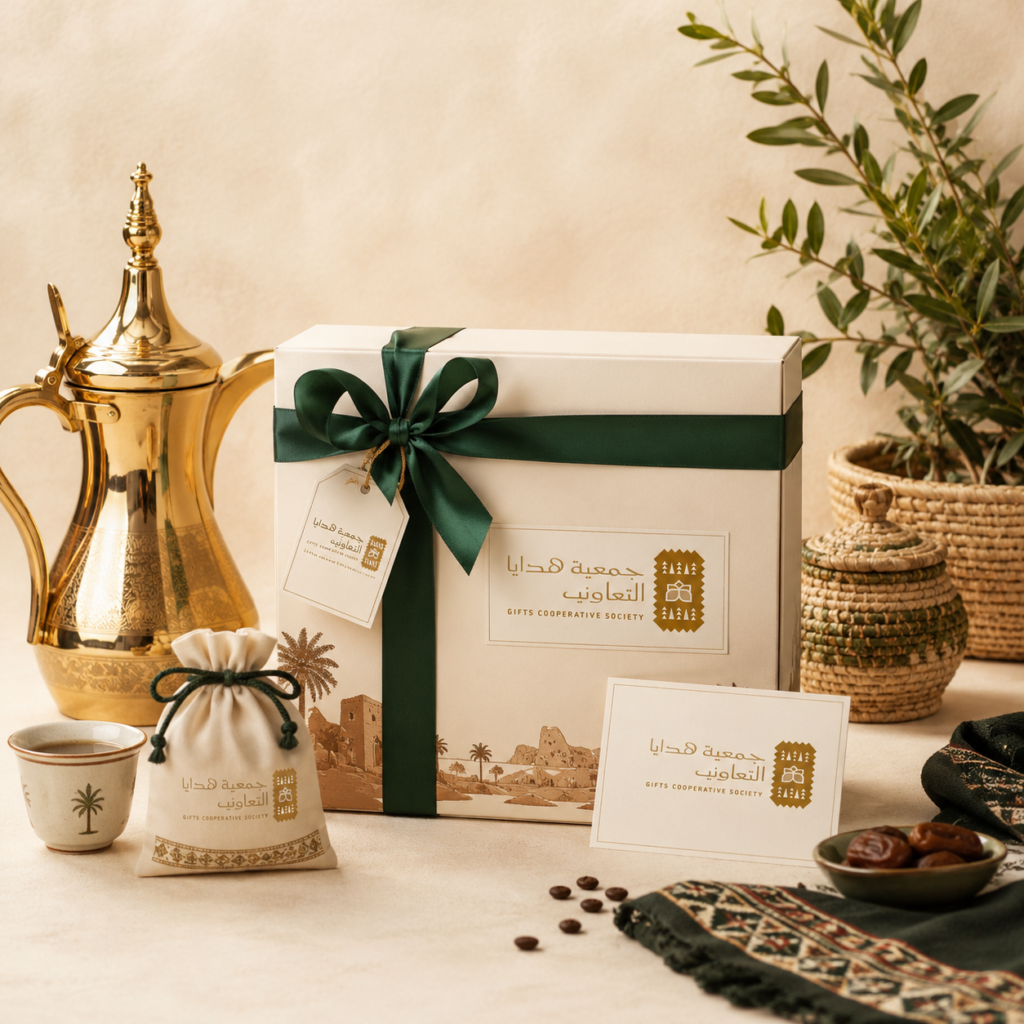
Packaging is part of the gift experience, not simply an outer layer. The box, cards, ribbons, protective inserts, and internal arrangement should support the same idea while protecting the products during handling and transport.
A gift intended for a traveling delegation has different packaging requirements from one distributed inside an event. Fragile items also require different protection from lightweight products.
The final review should consider the recipient’s first impression: what is seen first, how the card appears, whether the products are easy to understand, and whether any unnecessary details distract from the experience.
When Should an Organization Start Planning?
The more customized the project and the larger the quantity, the more important early planning becomes. A ready-made product with light branding may require much less time than a new design involving custom materials, prototypes, specialized packaging, or several suppliers.
A practical approach is to begin with the delivery date and work backwards through approval, production, packaging, and logistics. If the timeline is short, the level of customization can be adjusted to protect execution quality.
When all of these stages work together, the gift becomes a coherent experience rather than a collection of separate products.
To turn these stages into a real project, explore our gift design, production, and packaging services for companies and organizations.