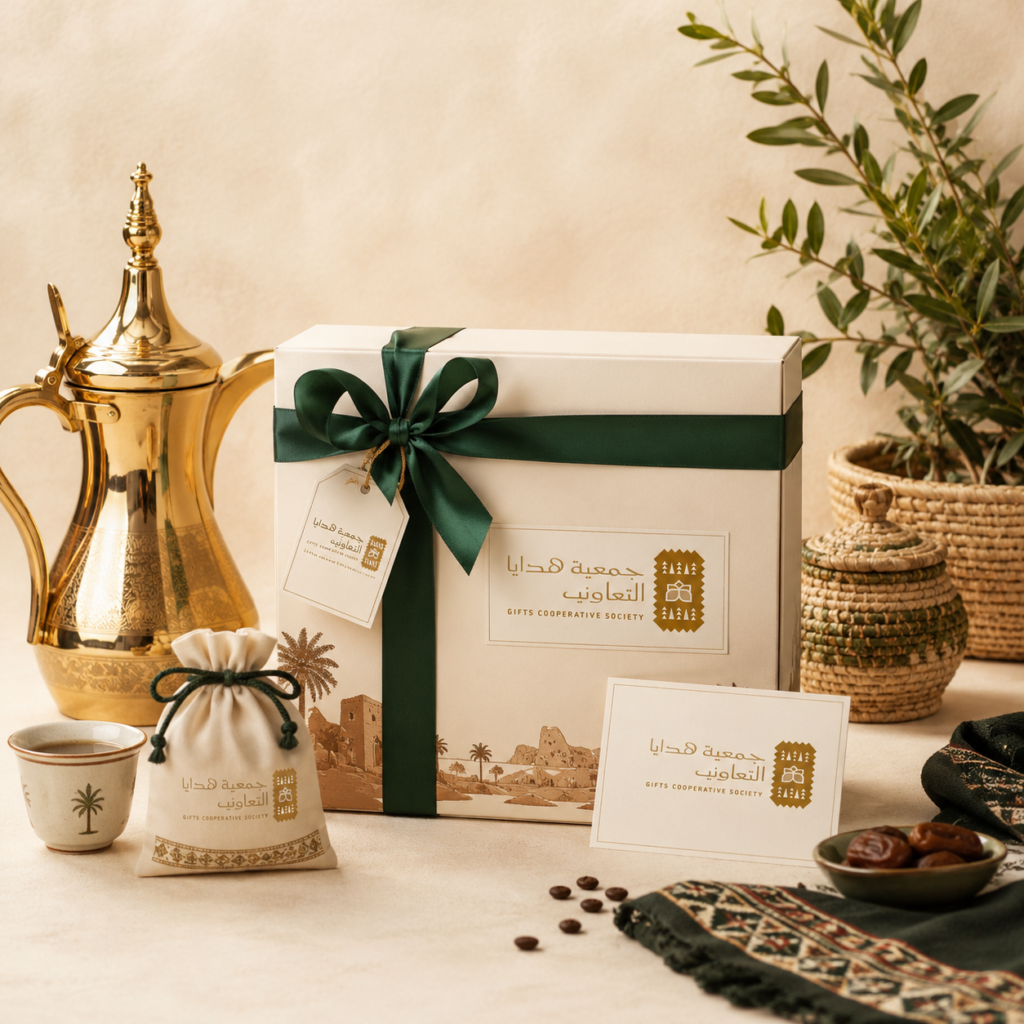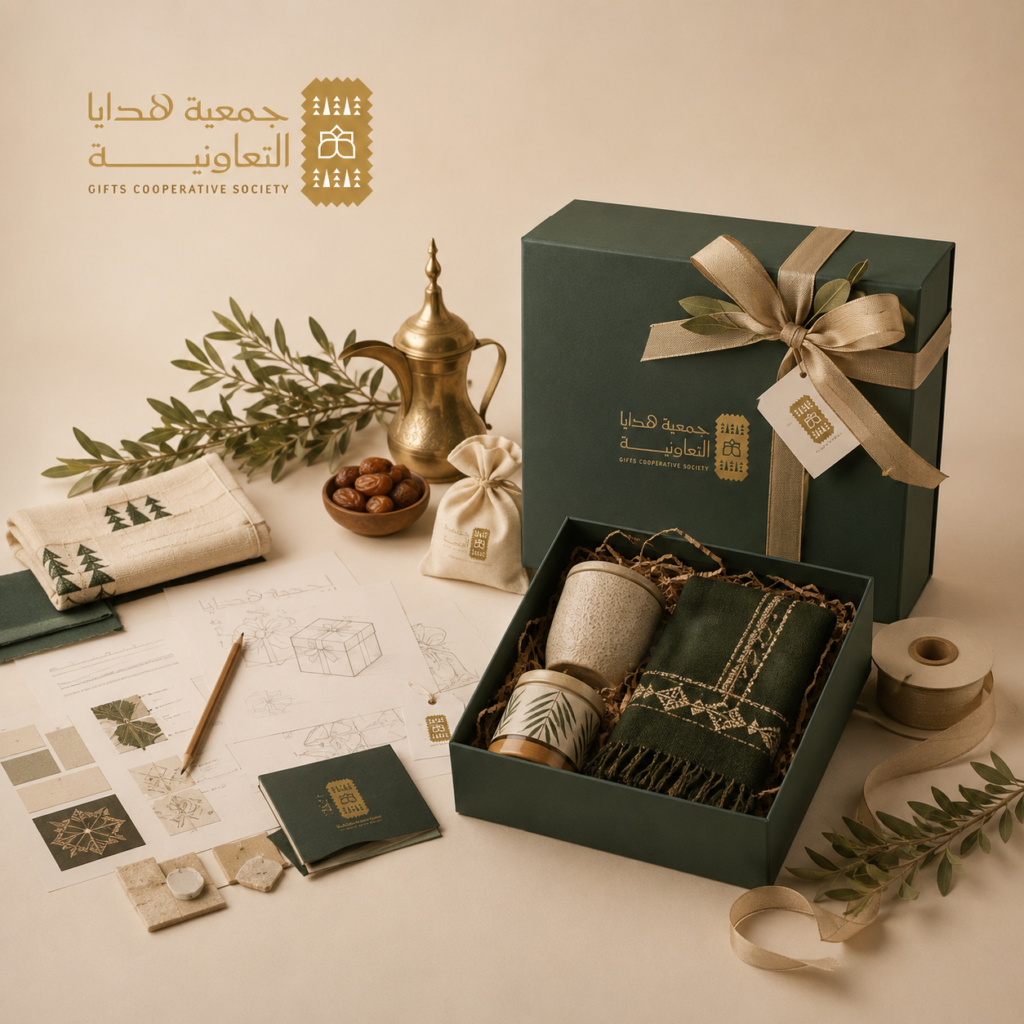

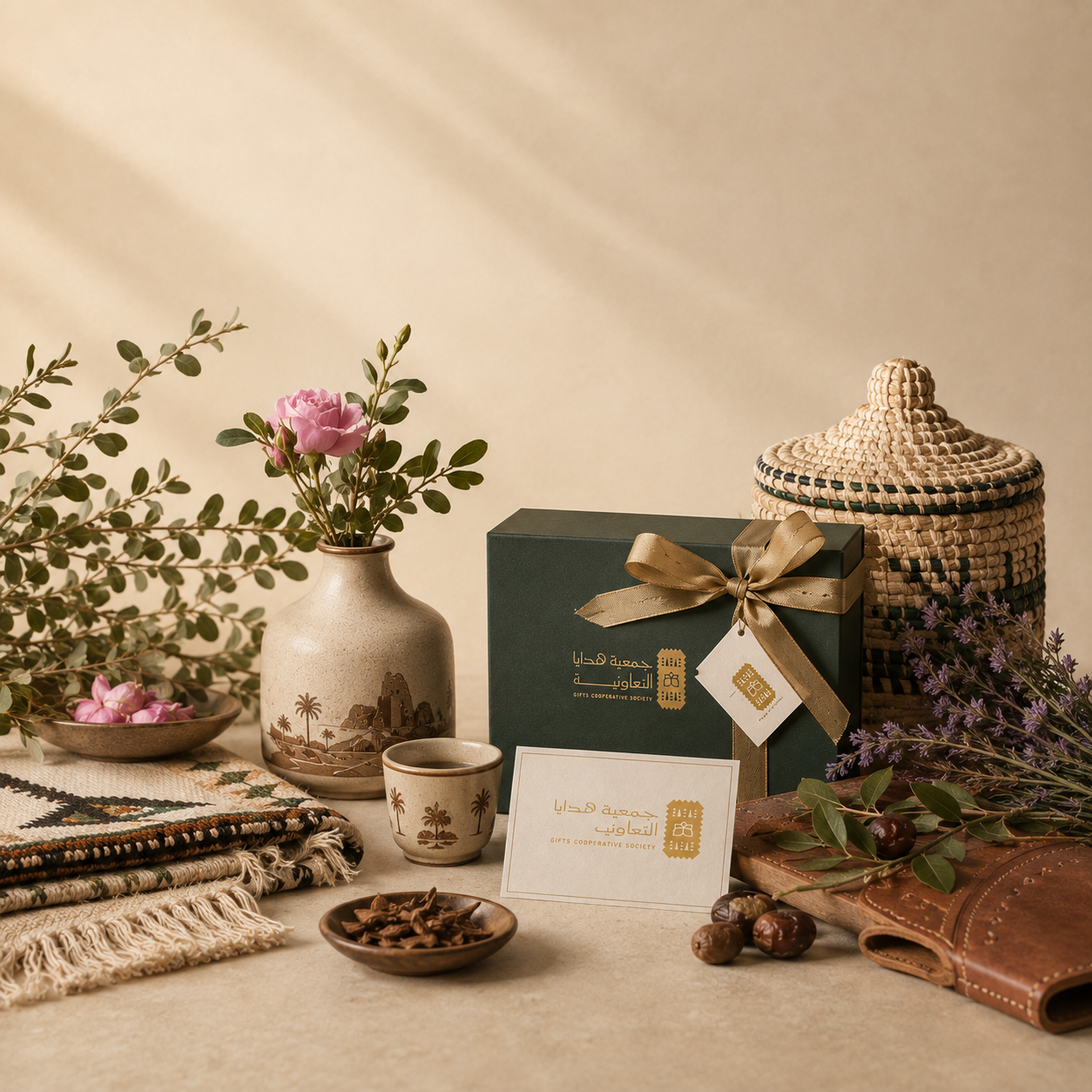
Saudi Arabia offers a wide range of materials, crafts, plants, textures, colors, and regional references that can inspire gift design. When these elements are understood rather than used as decoration alone, they can help create gifts that feel connected to place while remaining contemporary and practical.
Identity may appear through the material itself, a pattern, a color palette, a scent, a botanical reference, or the way the gift is packaged and presented.
Saudi Materials in Gift Design
Pottery, Sadu weaving, leather, palm weaving, and wood each offer a different visual and tactile character. Every material has its own production method, limitations, durability, and relationship to a local craft or environment.
Material selection is therefore both a design decision and a functional one. The right choice depends on how the gift will be used, how many units are required, how it will be transported, and how much variation can be accepted between pieces.
Wood may support engraving and precise dimensions, while pottery requires more attention to weight and protection. Handwoven elements may carry natural variation that should be considered part of the product rather than treated as a defect.
Sadu, Palm Weaving, and Pottery as Distinctive Elements
Sadu does not need to cover an entire product to communicate identity. A smaller woven detail inside a box, on a sleeve, or as part of a card holder may be enough to create a clear cultural reference without overwhelming the rest of the design.
Palm weaving can be used in baskets, covers, or handcrafted details, while pottery creates a stronger physical presence but requires additional planning for packaging, handling, and transport.
For high-volume projects, the ability to reproduce a reasonably consistent result should be evaluated before the material is approved.
Plants as a Visual and Sensory Reference
Taif rose, Sidr, Talh, lavender, and Arabian jasmine can inspire colors, patterns, illustrations, fragrances, or floral arrangements. The plant itself does not always need to be included physically; its form, color, or cultural association can guide the design in a more flexible way.
If natural or scented products are used directly, storage conditions, shelf life, transportation, and presentation should also be considered.
How Do You Choose the Right Material?
Start with four factors: the function of the product, required quantity, transportation needs, and level of customization. A gift intended for everyday use should prioritize durability, while a limited-edition VIP gift may allow more delicate handcrafted details.
It is also important to consider how the material works with the rest of the gift. Combining many local materials in one box is not always necessary; one strong material paired with restrained packaging can create a clearer result.
The level of customization can also be compared with the main gift categories for organizations and occasions.
Balancing Authenticity and Innovation
Using local elements does not mean reproducing traditional forms exactly as they were. The creative opportunity is to preserve the reference while reinterpreting it for contemporary use.
A traditional technique can appear in a modern product, a heritage pattern can be simplified for a clean package, or regional colors can be translated into a contemporary palette without copying the original environment literally.
From Material to a Product That Can Be Produced
After selecting the direction, the material should be tested in the real product. Finishing, color stability, customization, size, packaging, and repeatability all affect whether an idea can become a reliable gift solution.
When the project depends on a local artisan or producer, the design should respect their production capacity rather than forcing a form that cannot be repeated consistently. See how artisan and producer empowerment supports the gifting sector.
Through this approach, the material or plant becomes part of the story rather than a decorative addition, strengthening both the identity of the gift and the value of local craftsmanship.
For projects that use Saudi materials and crafts in institutional gifting, explore our Saudi corporate gift services and customization options.