

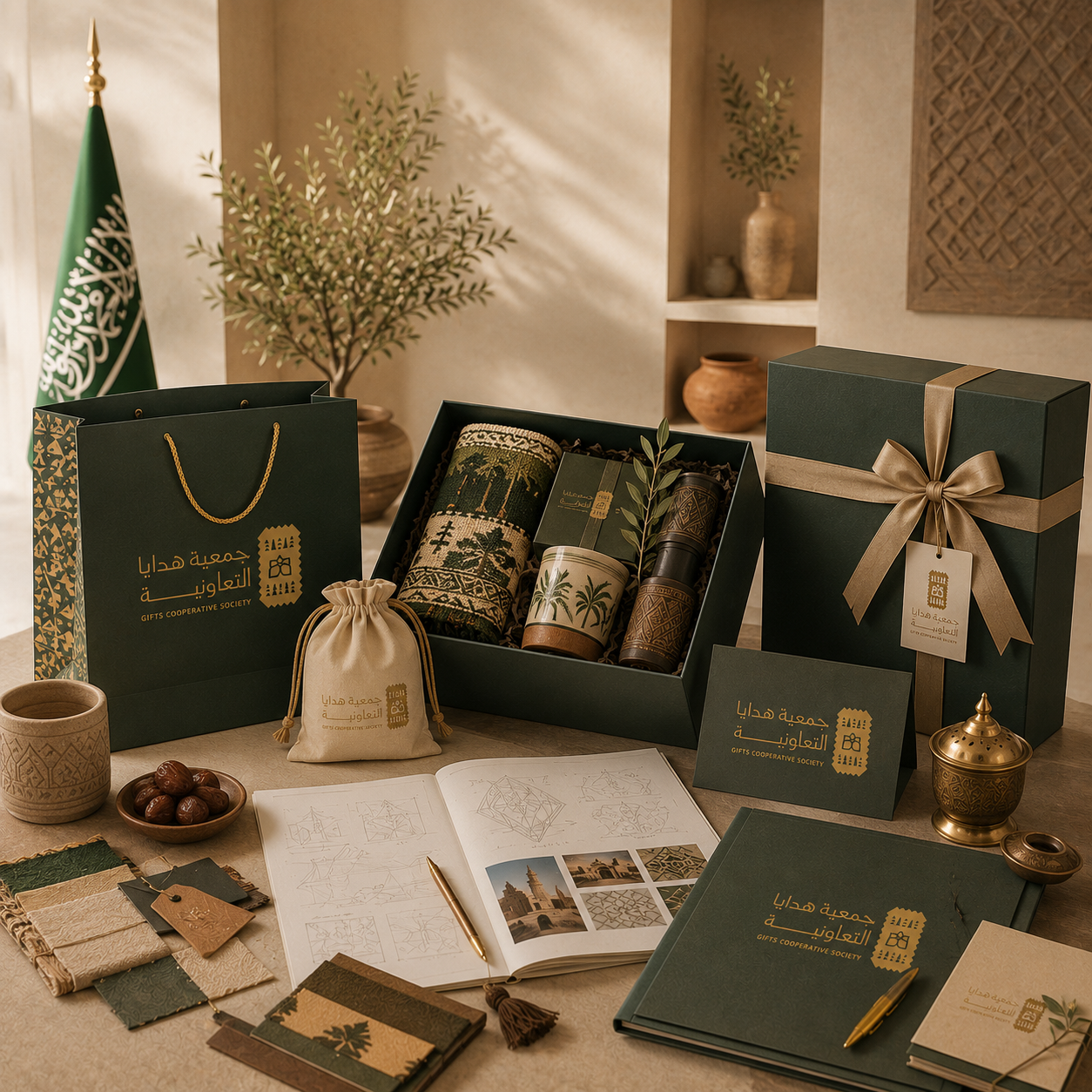
Developing cultural gifts often requires several parties to work together: the organization behind the occasion, designers, artisans, producers, suppliers, packaging teams, and execution partners. Partnerships make it possible to turn an idea into a product that can be produced reliably, presented professionally, and scaled when required.
The organization may own the message and audience, the designer translates that direction visually, and the artisan or producer contributes practical knowledge of materials and production. A clear working structure reduces the gap between the original concept and the final gift.
Partnerships with Government and Private Organizations
Organizations define the occasion, objectives, target audience, and identity requirements. Early dialogue helps ensure that the final gift is connected to the purpose of the project rather than simply carrying a logo as an added decoration.
A productive partnership begins with a clear scope: occasion, recipient, quantity, budget, deadline, and required level of customization. These details give the design and production teams a realistic foundation for development.
The organization can also identify non-negotiable elements such as brand guidelines or program messages while leaving enough room for the execution team to propose the most suitable practical solution.
Collaboration with National Talent
Artisans, designers, and producers contribute different types of expertise. Working together allows traditional craft to be integrated with contemporary design while balancing material choice, quality, cost, and production time.
Involving the artisan or producer early is particularly valuable because their knowledge of materials and production limits can prevent concepts that are difficult to repeat at the required scale.
This is closely connected to the empowerment of Saudi artisans and producers, where local capability becomes part of real projects with clear specifications and recurring opportunities.
Execution Partners and the Supply Chain
A gift project may depend on material suppliers, workshops, manufacturers, engraving or printing services, packaging providers, and logistics. Each part of this chain can influence the final quality and delivery date.
For projects involving several products, it is important to define who approves samples, who checks quality, and how delivery dates are coordinated. A delay in one component can affect assembly, packaging, and final delivery.
Events as a Gateway for Visibility
Exhibitions, cultural events, and national occasions provide opportunities to display products, test ideas, and introduce local producers to new audiences.
They also allow artisans and producers to observe how people respond to a product, identify what attracts attention, and understand what may need refinement. Organizations can also discover materials, products, and talent that may later become part of institutional gifting projects.
How Is a Partnership Built for Reliable Execution?
A practical partnership begins by defining responsibilities clearly: who makes the final decision, who develops the design, who produces the item, who reviews quality, and who manages packaging and delivery.
The project can then be divided into stages: initial concept, sample or prototype, approval, production, inspection, assembly, packaging, and delivery. This closely follows the gift journey from concept to packaging, with the additional task of coordinating multiple partners.
Reviewing the project after delivery also creates useful knowledge for future collaborations by identifying delays, successful materials, and opportunities for improvement.
Long-Term Shared Value
A successful partnership does not have to end with one order. It can develop into seasonal collections, custom gift programs, capability development, or initiatives that support cultural identity and the local economy.
Repeated collaboration also makes specifications clearer, reduces development time, and gives artisans and producers better visibility into real market needs.
Through this integration, Saudi gifts gain a greater ability to reach audiences while partnerships become a practical bridge between heritage, design, production, and innovation.
To build an institutional gifting project that brings concept, design, production, and the right partners together, explore our Saudi gift services for companies and organizations.